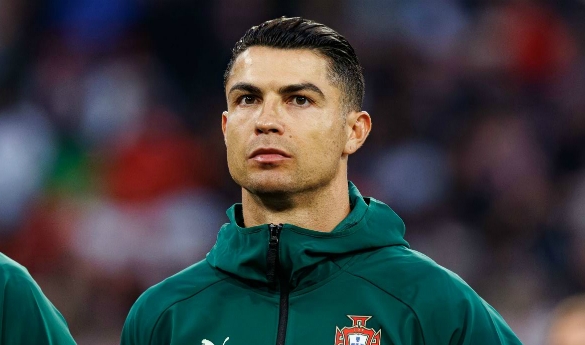
Cristiano Ronaldo’s potential involvement in the 2026 FIFA World Cup has become a key topic as Portugal prepares for the tournament under head coach Roberto Martínez. While Ronaldo remains an active international player, his role within a rapidly evolving squad is no longer as clearly defined as in previous years.
By the time the 2026 World Cup begins, Ronaldo will be 41 years old. Despite his longevity and continued professionalism, Portugal now features a new generation of attacking talent, creating increased competition for places in the starting lineup.
Selection Based on Performance Under Roberto Martínez
Since taking charge of Portugal in 2023, Roberto Martínez has emphasized a merit-based selection process. Squad decisions are influenced by current form, fitness levels, and tactical requirements rather than past achievements.
This approach reflects Portugal’s broader transition toward a system built on mobility, structured possession, and coordinated pressing. As a result, all players—including experienced veterans—must fit within the tactical framework to secure a role.
Cristiano Ronaldo’s International Record
Cristiano Ronaldo remains one of the most decorated players in football history. He is the all-time leading scorer in men’s international football and has represented Portugal across multiple major tournaments.
His international honors include:
- UEFA European Championship winner (2016)
- UEFA Nations League winner (2019)
At the 2022 FIFA World Cup, Ronaldo became the first player to score in five separate World Cup tournaments. Portugal reached the quarterfinals in that competition.
Portugal’s Squad Depth and Competition
Portugal enters the 2026 World Cup cycle with a deep and versatile squad. The team now relies on multiple attacking options rather than a single focal point, allowing for greater tactical flexibility.
Key players competing for attacking roles include:
- Rafael Leão – Provides pace and width in wide areas
- Gonçalo Ramos – Offers movement, pressing, and central finishing ability
- João Félix – Contributes technical skill and link-up play
- Bernardo Silva – Adds creativity and control in advanced midfield positions
- Bruno Fernandes – Delivers goal threat and playmaking from midfield
This depth allows Portugal to adapt its attacking structure depending on the opponent and match situation.
Tactical Considerations
Portugal’s tactical system under Martínez emphasizes fluid attacking movement, positional rotation, and coordinated pressing. These elements require high levels of mobility and defensive contribution from forward players.
Ronaldo’s strengths remain clear:
- Finishing ability inside the penalty area
- Positioning and anticipation
- Experience in high-pressure matches
- Leadership within the squad
However, modern tactical systems often demand consistent pressing and off-ball movement, which places different physical requirements on attacking players compared to earlier stages of Ronaldo’s career.
Possible Role at the 2026 World Cup
Ronaldo’s inclusion in Portugal’s 2026 World Cup squad will depend on his form, fitness, and tactical fit during the qualification cycle and lead-up matches.
Potential roles could include:
- Starting forward in specific matches based on tactical needs
- Rotational player within the attacking unit
- Substitute option providing experience and finishing ability
Portugal’s coaching staff will likely assess match situations carefully to determine how best to utilize his strengths while maintaining overall team balance.
Portugal’s Defensive and Midfield Core
Portugal’s strength is not limited to attack. The team also features a solid defensive and midfield foundation that supports its tactical approach.
- Diogo Costa – First-choice goalkeeper with strong distribution skills
- Rúben Dias – Central defender known for leadership and defensive organization
- João Cancelo – Attacking full-back contributing to buildup play
- Nuno Mendes – Provides pace and width from the left side
- Vitinha – Offers control and passing in midfield
This balance across the pitch allows Portugal to compete at a high level against top international opposition.
Expectations for Portugal in 2026
Portugal is expected to be among the stronger teams heading into the 2026 FIFA World Cup. The expanded tournament format increases the number of teams advancing to the knockout stage, providing additional opportunities for progression.
Key factors influencing Portugal’s performance will include:
- Maintaining tactical cohesion
- Maximizing squad depth
- Adapting strategies based on opponents
- Managing player fitness across the tournament
Conclusion
Cristiano Ronaldo’s role at the 2026 FIFA World Cup remains dependent on performance, fitness, and tactical considerations. While his legacy and experience are unmatched, Portugal’s evolution into a balanced and flexible team means decisions will be made based on what best supports overall team success.
As the tournament approaches, Ronaldo’s involvement will continue to be closely monitored, reflecting both his enduring influence on the game and Portugal’s transition into a new era of international football.